Fashion: Emerging Designers Are Redefining the Runway Emerging designers are no longer waiting in the wings. From Washington to Milan, a new generation is taking center stage and rewriting the rules of what fashion can be. Just hours before a major show, the energy backstage is a mix of excitement, last-minute stitching, and pure ambition …
Fashion: emerging designers
Fashion: Emerging Designers Are Redefining the Runway
Emerging designers are no longer waiting in the wings. From Washington to Milan, a new generation is taking center stage and rewriting the rules of what fashion can be. Just hours before a major show, the energy backstage is a mix of excitement, last-minute stitching, and pure ambition — and that is exactly where the future of fashion is born.
Who Are Today's Emerging Designers?
Emerging designers are independent creatives who are building their brand outside the traditional system of large fashion houses. They often operate with small teams, limited budgets, and a strong personal vision. Unlike established labels, they are not bound by decades of heritage, which gives them the freedom to experiment with form, gender, culture, and sustainability.
In the past, you needed a showroom in Paris or a buyer from New York to be noticed. Today, platforms like DC Fashion Week, Instagram, and Vogue’s CFDA/Vogue Fashion Fund have created direct bridges between emerging designers and a global audience. What they lack in budget, they make up for in authenticity.
Why Emerging Designers Matter Right Now
The fashion industry is at a crossroads. Consumers are more conscious than ever about where their clothes come from, who makes them, and what impact they have. This is where emerging designers lead.
First, sustainability. Many young designers start sustainable because they have to. They use deadstock fabrics, upcycled materials, and small-batch production because they cannot afford large factories. For example, knitwear like the colorful handmade pieces seen in the Emerging Designers Showcase by designer Shey Natividad demonstrates a slow-fashion approach that contrasts with fast-fashion mass production.
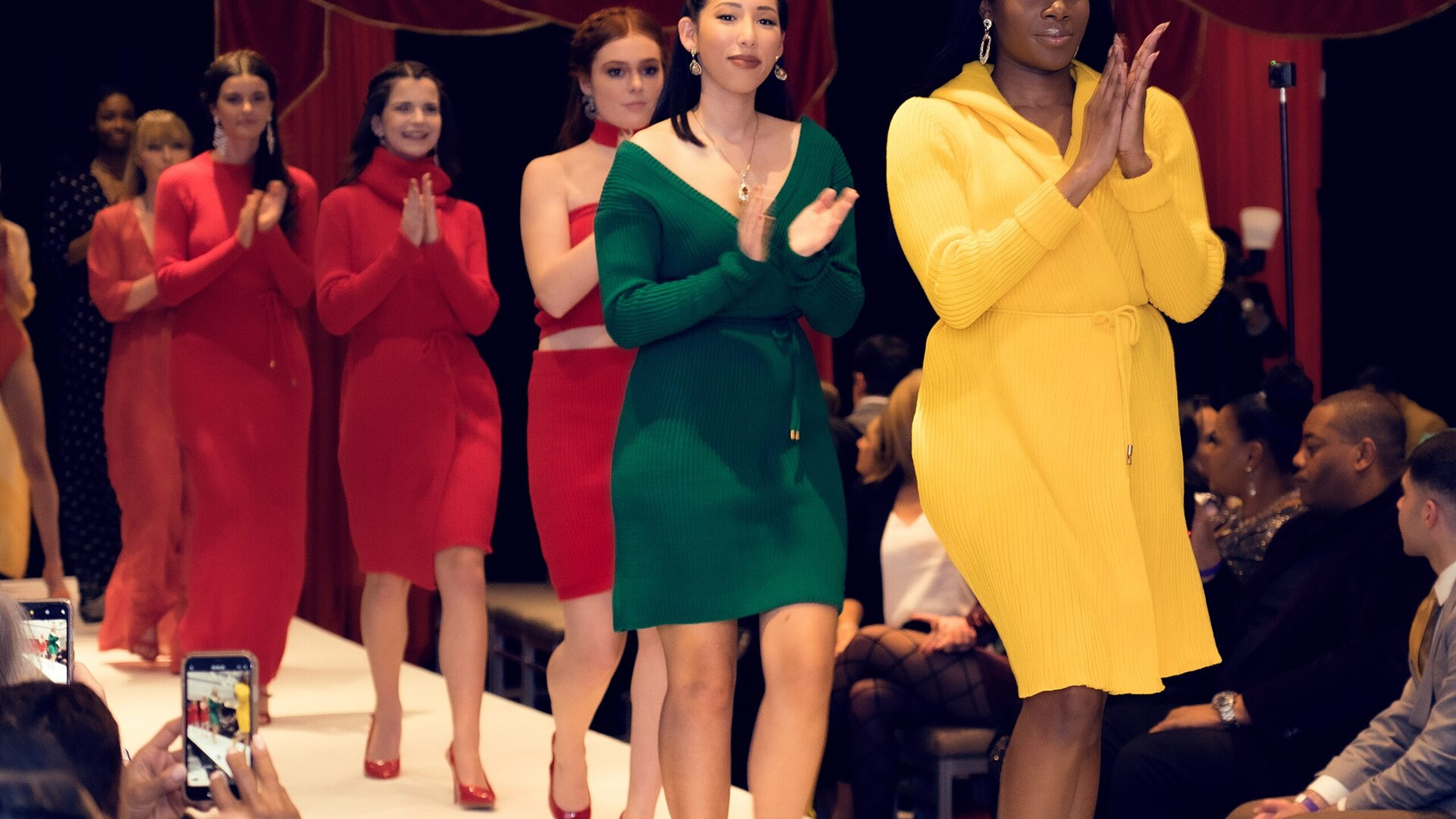
Second, diversity. Emerging designers are bringing their own cultural stories to the runway. Shey Natividad, a Filipino-American designer, is known for blending vibrant island colors with modern silhouettes — the red, green, and yellow knit dresses that lit up the DC Fashion Week runway on February 22, 2020, are a perfect example of joyful, heritage-driven design.
Third, accessibility. They price more fairly, they talk directly to customers, and they show that high fashion does not have to be intimidating.
Inside the Showcase: Shey Natividad at DC Fashion Week
The photo that captures this moment was taken at the DC Fashion Week – Emerging Designers Showcase. Three models walk the runway wearing Shey Natividad’s signature knitwear: bold, color-blocked dresses with exaggerated shoulders and playful textures. The audience leans in. Photographers kneel. It is not Paris or Milan, but the excitement is identical.
DC Fashion Week, held twice a year in the nation’s capital, has become a crucial incubator for emerging designers in the United States. On February 22, 2020, at 20:46, photographer Ted Eytan captured this precise moment. The location — 38°53’48″N, 77°00’39″W — is just blocks from the White House, yet the spirit is entirely independent.
What makes this showcase important is its format. No 10-minute mega-production with 100 looks. Instead, emerging designers present 8-12 carefully crafted looks, allowing buyers and press to actually see the construction, the fabric, and the story.
The Biggest Challenges for Emerging Designers
Despite the buzz, the path is not easy.
Funding is the first hurdle. A single runway show can cost $15,000 to $50,000 for venue, models, hair, makeup, and lighting. Most emerging designers self-fund or rely on small grants.
Production is second. Finding ethical factories willing to produce 50 units instead of 5,000 is extremely difficult. Many emerging designers end up sewing samples themselves.
Visibility is third. Competing with the algorithm is a full-time job. Without a major PR team, emerging designers must be the designer, the content creator, the customer service, and the model.
This is why showcases and fashion weeks dedicated to emerging designers are vital. They offer press coverage, buyer contacts, and credibility that would otherwise take years to build.
How to Support Emerging Designers
If you want fashion to change, support the people who are changing it.
Shop directly. Buy from their official websites, not just large marketplaces. A direct sale gives them 3x the profit.
Follow and share. An Instagram save and share is free but it tells the algorithm that their work matters.
Attend local fashion weeks. Events like DC Fashion Week, Vancouver Fashion Week, and Lagos Fashion Week are affordable, open to the public, and often more creative than the big four.
Ask about the story. When you wear an emerging designer’s piece, people ask about it. That conversation is marketing no money can buy.
The future of fashion will not be decided only in the offices of Kering or LVMH. It will be decided by emerging designers stitching late at night in small studios in Washington, Manila, Lagos, and Milan, who believe that a dress can still be a statement of joy.
As the lights came up on Shey Natividad’s colorful finale in 2020, the message was clear: emerging designers are not the future of fashion. They are the present.